
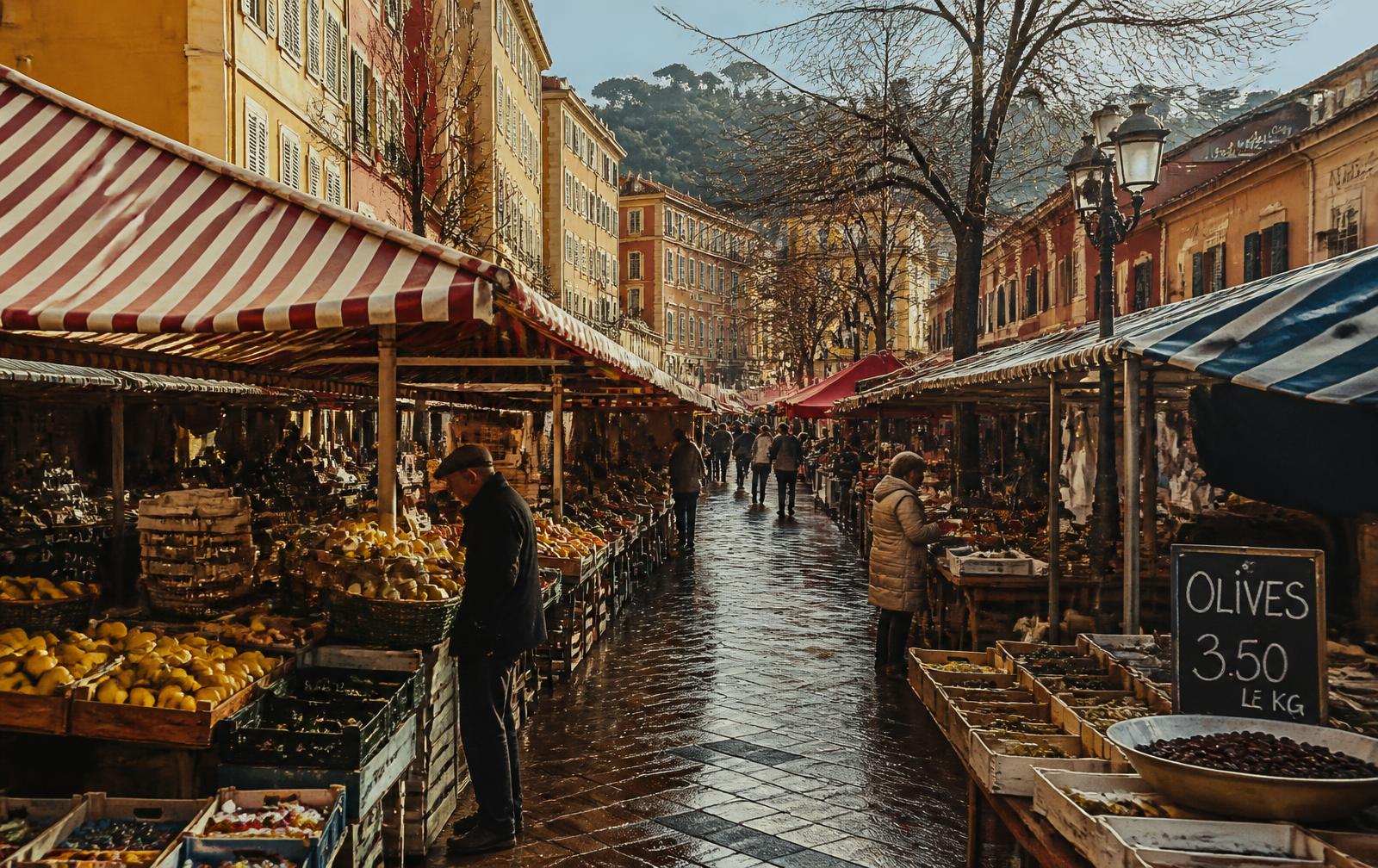
Cours Saleya market in Old Nice at dawn, striped awnings and crates of lemons and olives

Stop 01 · 43.7°N · Booking now

Nice 

You'll taste the argument before you hear the history. One walk, hosts who live here, €79 per person.

Tue – Sun✦12 tastings✦Hosts who cook here✦Free cancellation · 24h✦Tue – Sun✦12 tastings✦Hosts who cook here✦Free cancellation · 24h✦

The approach

Come at Nice from the water, the way its cargo did, and the city stops looking French. It faces Genoa. It sits at the western hinge of the Ligurian coast, where the Alps drop straight into salt water and the only easy road was always the sea. Nice belonged to the House of Savoy from 1388 and only voted itself into France in 1860, a border younger than most of the recipes still cooked here.

Ships out of Genoa and Marseille docked here with the same cargo they carried everywhere: salt, dried cod from the Atlantic, chickpea flour, oil. The Alpine passes behind the city ran the salt inland. Nice was a waypoint, and waypoints eat what passes through them.

Nice spent five centuries arguing with its neighbours about a border, a tax and a recipe. Somehow, that argument is still the best thing to eat here. The walk below is built out of it.

Book a walk

Four streets apart, five centuries apart.

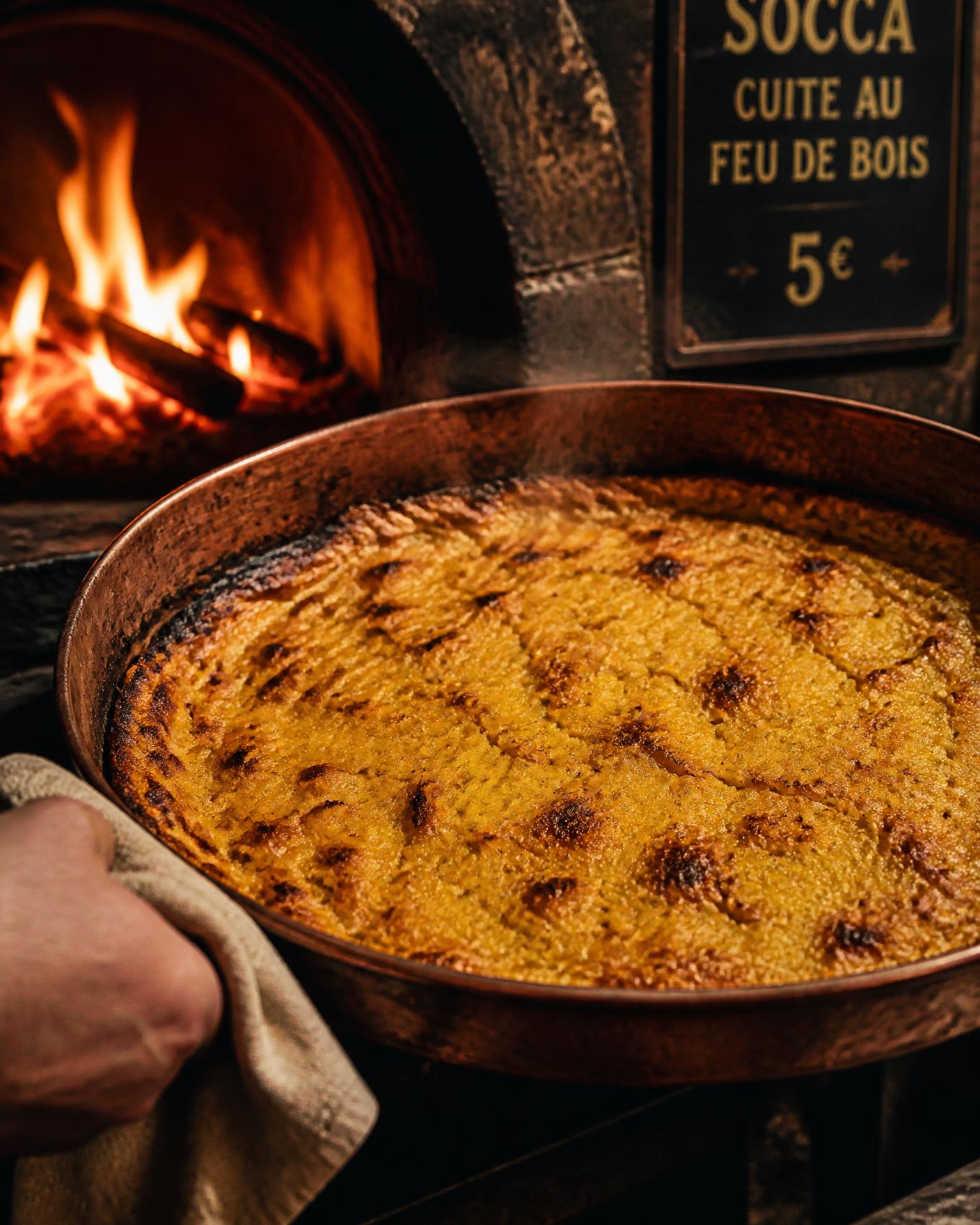
A copper pan of socca pulled from a wood oven, charred and steaming

Tradition & Reinvention

Taste the original. Then taste what happens next.

3 hours · 12 tastingsTue – Sun

A walking feast through Vieux Nice and the Port, following the dishes that have fed the city for generations. Tear into hot socca straight from the copper pan, share crisp courgette flowers and petits farcis over a cold glass of rosé.

Along the way, discover how fishermen, farmers, trade and necessity created la cuisine nissarde, food once born from very little and now fiercely protected as part of the city's identity.

Then taste where the Riviera is going. A new generation of chefs works with the same citrus, flowers, chickpeas and market vegetables, turning them into something entirely their own. Familiar flavours come back in unexpected forms: refined, playful and unmistakably Mediterranean.

Come hungry. Eat with your fingers. Leave knowing Nice differently.

€79per person

Meets Place Garibaldi, 11:15 am

Book this walk

What this stop holds onto

Poverty food that refused to be replaced.

Socca is chickpea flour, water, olive oil, salt, and a wood oven hot enough to hurt. Its twin lives 200km east in Genoa as farinata; the flour came in as cheap ballast cargo and stayed because it fed dockworkers for centimes. Pissaladière is named for pissalat, a fermented anchovy paste whose logic is Roman garum with a Provençal accent. That's not a coincidence. That's the same trade route showing up twice.

Stockfish, or estocaficada here, is Atlantic cod, dried on Norwegian racks, rehydrated on a Mediterranean coast that has plenty of its own fish. It survived because it kept. It stayed because the city learned to like it.

What this stop is reinventing

A younger kitchen, arguing in the same language.

The hills behind the city grow Bellet, one of France's smallest appellations: under 60 hectares, planted with Folle Noire and Braquet, grapes almost nobody else keeps. The current generation farms it without additions and pours it beside plates that read like footnotes to the old ones: pissaladière logic on a raw fish, mesclun treated as a course rather than a garnish.

Nothing here is discarded. A cook who ferments anchovy in a temperature-controlled box is still making pissalat; the technique has old roots and a new thermometer. Downstream, same river.

Before you book

Practical questions

The throughline

Salt came ashore here on its way somewhere else, and everything worth eating in Nice is what the city kept from the passage, proof that this coastline was never a set of countries, only one long conversation with a tide in it.